
Eco: Bruno: Ars Combinatoria & Infinite Worlds, 2
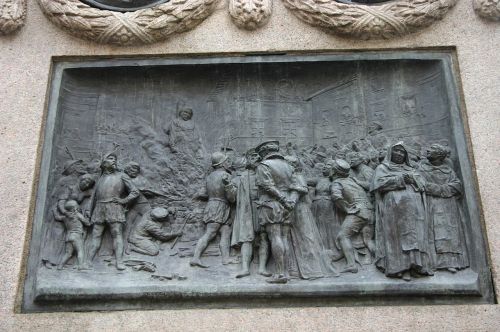
Ettore Ferrari (1845-1929), Giordano Bruno Burned at the Stake, a bas relief on the plinth of the monument to Bruno in Campo de’Fiori square in Rome. This photo by Giovanni Dall’Orto © 2008. The copyright holder of this photo allows anyone to use for any purpose, provided that the copyright holder is properly attributed. Redistribution, derivative work, commercial use, and all other use is permitted.
“Thus this language claimed to be so perfect as to furnish the keys to express relations between things, not only of this world, but of any of the other infinite worlds in their mutual concordance and opposition.
Nevertheless, in its semiotic structure, it was little more than an immense lexicon, conveying vague meanings, with a very simplified syntax. It was a language that could be deciphered only by short-circuiting it, and whose decipherment was the privilege only of the exegete able to dominate all its connections, thanks to the furor of Bruno’s truly heroic style.
In any case, even if his techniques were not so different from those of other authors of arts of memory, Bruno (like Lull, Nicholas of Cusa and Postel, and like the reformist mystics of the seventeenth century–at whose dawn he was to be burnt at the stake) was inspired by a grand utopian vision.
His flaming hieroglyphical rhetoric aimed at producing, through an enlargement of human knowledge, a reform, a renovation, maybe a revolution in the consciousness, customs, and even the political order of Europe. Of this ideal, Bruno was the agent and propagandist, in his wandering from court to European court.
Here, however, our interest in Bruno is limited to seeing how he developed Lullian techniques. Certainly, his own metaphysics of infinite worlds pushed him to emphasize the formal and architectonic aspects of Lull’s endeavor.
One of his mnemonic treatises, De lampade combinatoria lulliana ad infinita propositiones et media inveniendi (1586), opens by mentioning the limitless number of propositions that the Ars is capable of generating, and then says: “The properties of the terms themselves are of scant importance; it is only important that they show an order, a texture, an architecture.” (I, ix).
In the De umbris idearum (1582) Bruno described a set of movable, concentric wheels subdivided into 150 sectors. Each wheel contained 30 letters, made up of the 23 letters of the Latin alphabet, plus 7 letters from the Greek and Hebrew alphabets to which no letter corresponded in Latin (while, for instance, A could also stand for Alpha and Alef).
To each of the single letters there corresponded a specific image, representing for each respective wheel a different series of figures, activities, situations, etc. When the wheels were rotated against each other in the manner of a combination lock, sequences of letters were produced which served to generate complex images. We can see this in Bruno’s own example (De umbris, 163):
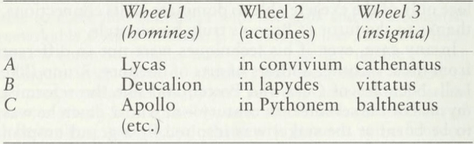
Reproduced from Umberto Eco, The Search for the Perfect Language, James Fentress, trans., Blackwell: Oxford, 1995, p. 136, from Giordano Bruno, De umbris idearum, 1582, p. 163.
In what Bruno called the “Prima Praxis,” the second wheel was rotated so as to obtain a combination such as CA (“Apollo in a banquet”). Turning the third wheel, he might obtain CAA (“Apollo enchained in a banquet”). We shall see in a moment why Bruno did not think it necessary to add fourth and fifth wheels as he would do for the “Secunda Praxis,” where they would represent, respectively, adstantia and circumstantias.
In his “Secunda Praxis,” by adding the five vowels to each of the 30 letters of his alphabet, Bruno describes 5 concentric wheels, each having 150 alphabetical pairs, like AA, AE, AI, AO, AU, BA, BE, BO, and so on through the entire alphabet.
These 150 pairs are repeated on each of the 5 wheels. As in the “Prima Praxis,” the significance changes with every wheel. On the first wheel, the initial letter signifies a human agent, on the second, an action, on the third, an insignia, on the fourth, a bystander, on the fifth, a set of circumstances.
By moving the wheels it is possible to obtain images such as “a woman riding on a bull, combing her hair while holding a mirror in her left hand, accompanied by an adolescent carrying a green bird in his hand” (De umbris, 212, 10).
Bruno speaks of images “ad omnes formationes possible, adaptabiles” (De umbris, 80), that is, susceptible of every possible permutation. In truth, it is almost impossible to write the number of sequences that can be generated by permutating 150 elements 5 at a time, especially as inversions are allowed (De umbris, 223).
This distinguishes the art of Bruno, which positively thirsts after infinity, from the art of Lull.”
Umberto Eco, The Search for the Perfect Language, translated by James Fentress, Blackwell. Oxford, 1995, pp. 135-7.


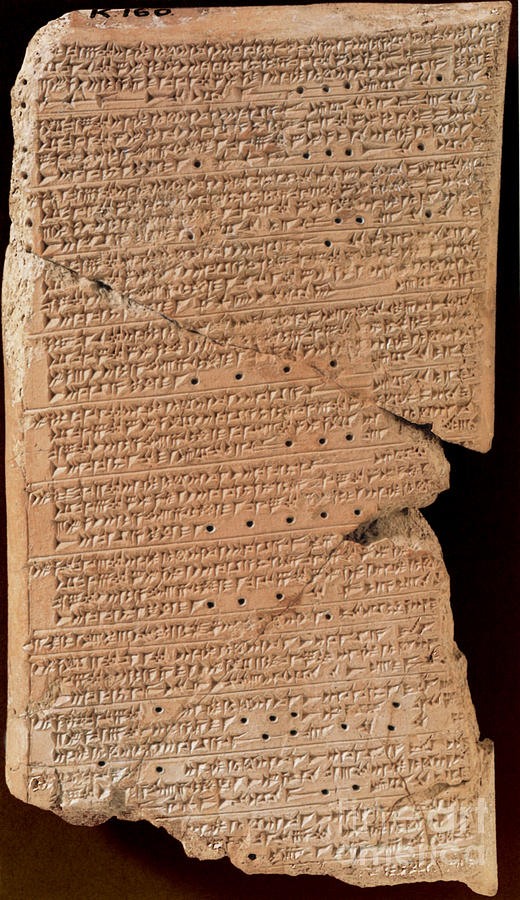






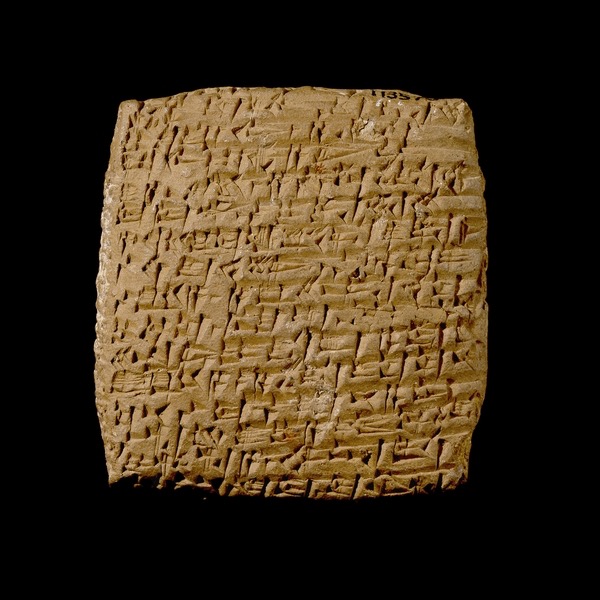
![The relevant lines are quoted below in a translation by Bert van der Spek.
[Column 5] 4 For two years [he will exercise kingship]. [1]. 5 That king a eunuch [will murder]. 6 A certain prince [......] [2] 7 will set out and [seize] the thr[one] 8 Five years [he will exercise] king[ship] 9 Troops of the land of Hani [......] [3] 10 will set out a[nd? .. ]./-ship?\ th[ey will? ...] 11 [his] troop[s they will defeat;] 12 booty from him they will take [and his spoils] 13 they will plunder. Later [his] tr[oops ...] 14 will assemble and his weapons he will ra[ise (...)] 15 Enlil, Šamaš and [Marduk(?)] [4] 16 will go at the side of his army [(...);] 17 the overthrow of the Hanaean troops he will [bring about]. 18 His extensive booty he will car[ry off and] 19 into his palace he [will bring it] 20 The people who had [experienced] misfortune 21 [will enjoy] well-being. 22 The heart of the land [will be happy] 23 Tax exemption [he will grant to Babylonia]
http://www.livius.org/aj-al/alexander/alexander_t49.html](https://therealsamizdat.com/wp-content/uploads/2015/08/dynastic-prophecy-bm40623_cols_vi_v.jpg)


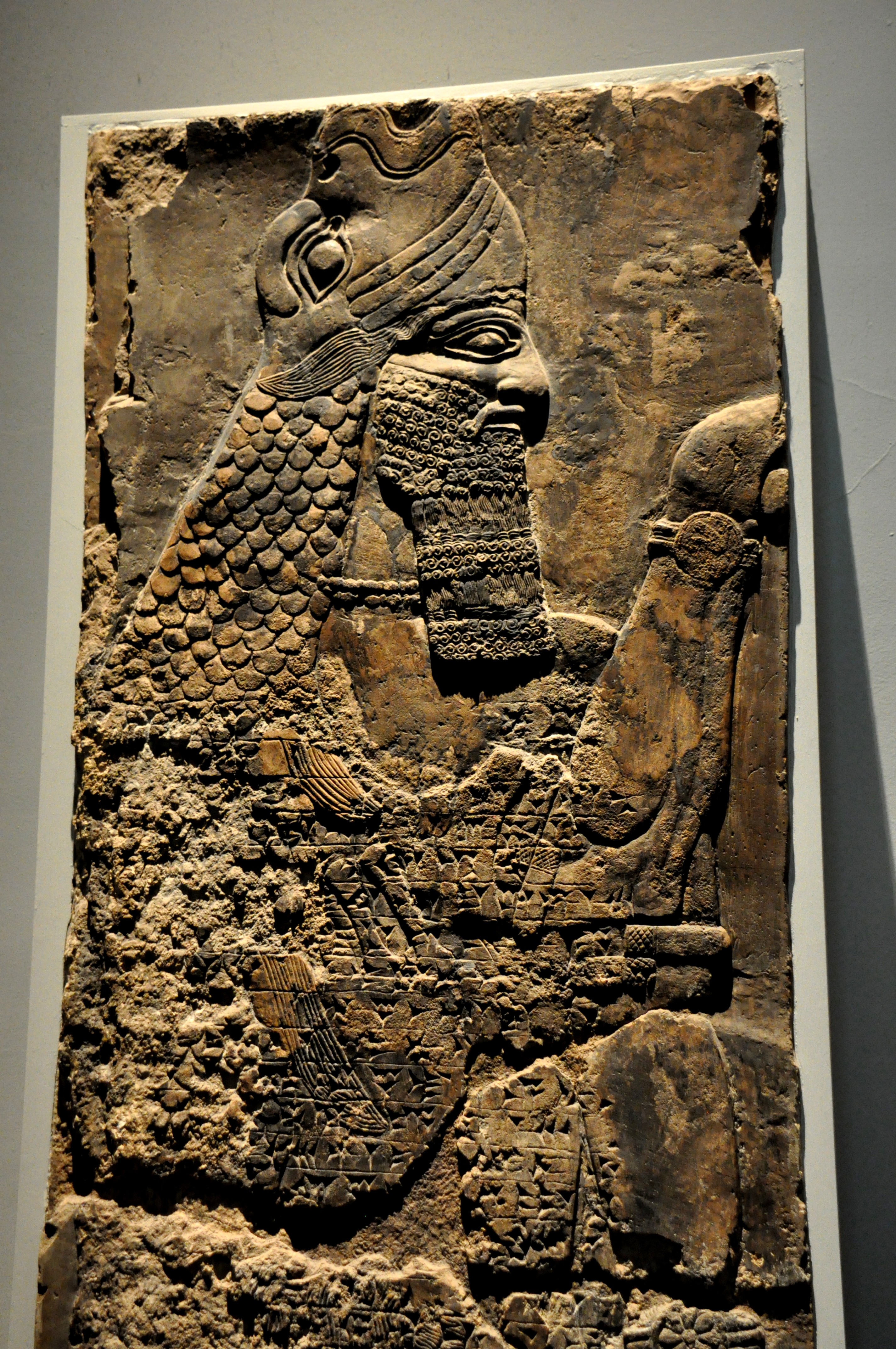
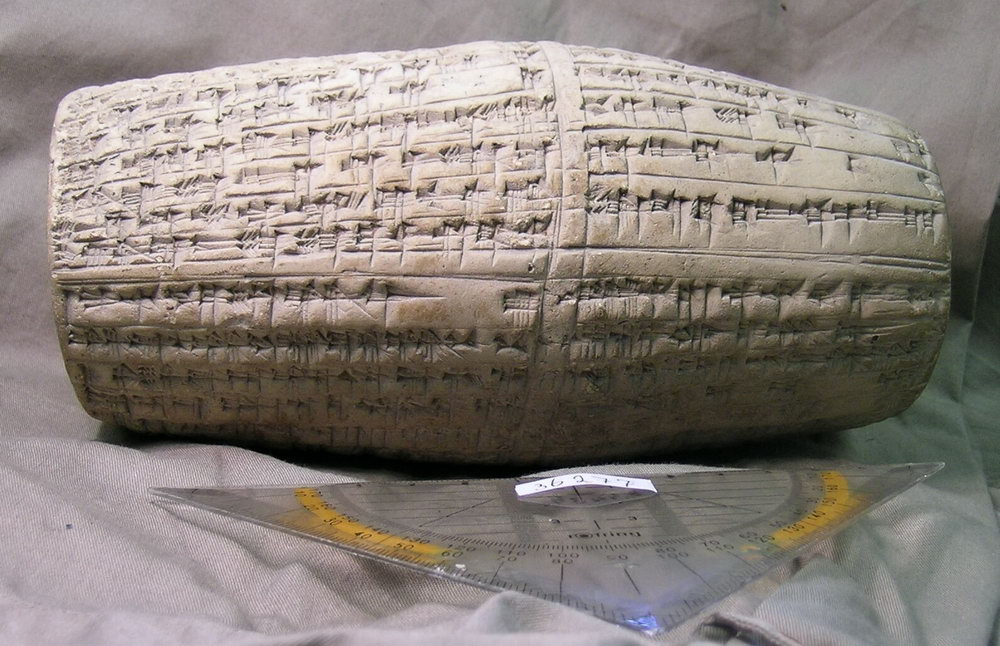
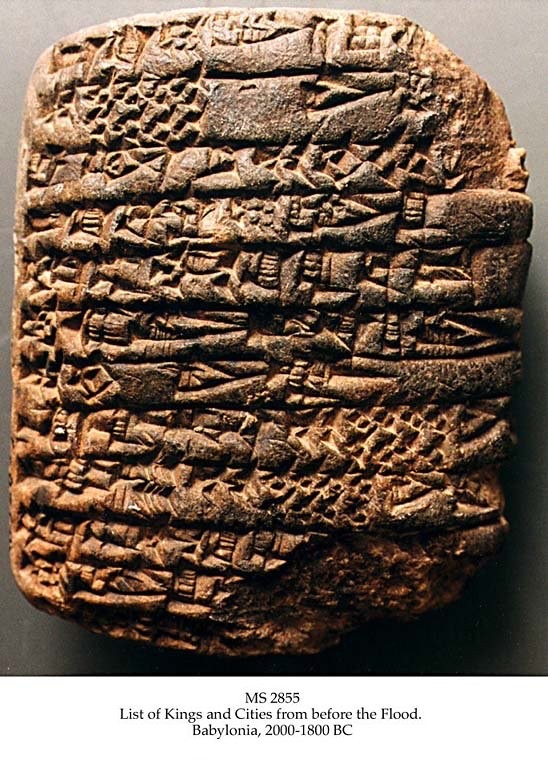
![AM-102 ; No. #1 (K4023) British Museum of London
Tablet K.4023 COL. I [Starting on Line 38] . . . Root of caper which (is) on a grave, root of thorn (acacia) which (is) on a grave, right horn of an ox, left horn of a kid, seed of tamarisk, seed of laurel, Cannabis, seven drugs for a bandage against the Hand of a Ghost thou shalt bind on his temples. FOOTNOTES: [1] - The American Journal of Semitic Languages and Literatures, Vol. 54, No. 1/4 (Oct., 1937), pp. 12-40; Assyrian Prescriptions for the Head By R. Campbell Thompson
http://antiquecannabisbook.com/chap2B/Assyria/K4023.htm](https://therealsamizdat.com/wp-content/uploads/2015/07/k4023-antdiluvian-medical-text.jpg)







 Samizdat

