
Lenzi: On Nikarchos and Kephalon
“While properly recognizing Seleucid adoption or support of Babylonian traditions and institutions, we should not allow the pendulum to swing too far toward a thorough-going pro-Babylonian policy.
As noted by Sherwin-White, “there is . . . a tendency in writing on the Seleucids, and on the hellenistic world in general, to concertina three whole centuries of history and assume . . . that what is characteristic of one century, or of part of it, is equally true of the whole.”
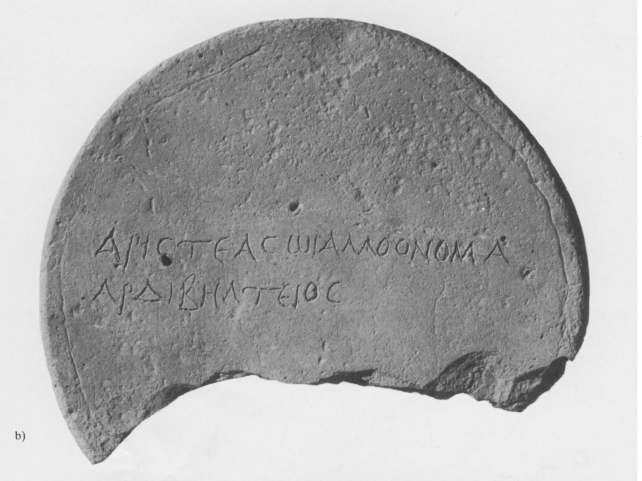
Clay jar lid, incised with a Greek inscription; diameter 0.165, maximum thickness 0.015. Letters 0.005 – 0.01.
Now in the Yale Babylonian Collection (MLC 2632).
Courtesy of the Yale Babylonian Collection.
S.M. Sherwin-White, Zeitschrift fur Papyrologie und Epigraphik, Bd. 50 (1983), p. 221.
http://www.jstor.org/stable/20183777
Thus, we should not assume that temple renovations started under Alexander or a ruler fashioning himself according to the pattern of a good Mesopotamian king in the mid-third century was the Seleucid policy, that it always characterized the Seleucid policy for the duration of the empire in every location under their governance.
Two well-known dedicatory inscriptions from the second half of the third century (i.e., 244 BCE, during the reign of Seleucus II, and 201 BCE, during the reign of Antiochus III) that describe temple renovations on Uruk’s Bīt Rēš temple might in fact hint at a cooling of Seleucid interests in Mesopotamia, at least outside the city of Babylon.
(Editions of the two texts may be found in Falkenstein, Topographie von Uruk, 4-7. For the Kephalon inscription, see the improved readings offered by van Dijk, “Die Inschriftenfunde,” 47 (though he accidentally attributes the inscription to Nikarchos instead of Kephalon).
For Seleucid interaction with Mesopotamian cults, see note 64.)
Although both inscriptions describe the temple renovation as having been undertaken “for the life of the king” (ana bulta ša RN) and probably therefore suggest the indirect involvement of the Seleucid rulers, the actual administrators of the work according to these texts were city/temple officials, the famous Anu- uballit–Nikarchos and Anu-uballit–Kephalon.
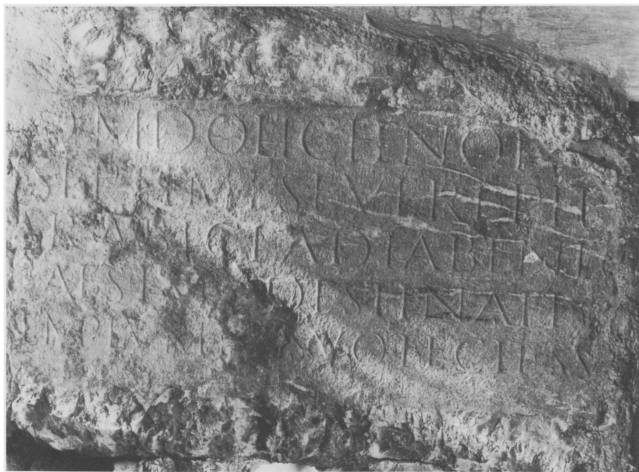
From:
S. M. Sherwin-White
Aristeas Ardibelteios: Some Aspects of the Use of Double Names in Seleucid Babylonia
Zeitschrift für Papyrologie und Epigraphik
Bd. 50 (1983), pp. 209-221
http://www.jstor.org/stable/20183777?&seq=14#page_scan_tab_contents
(For these two men, their titles (šaknu and rab ša rēš āli ša Uruk), hierarchical relationship, families, and attestation elsewhere in Seleucid cuneiform documents, see L. Timothy Doty, “Nikarchos and Kephalon,” in A Scientific Humanist: Studies in Memory of Abraham Sachs, ed. Erle Leichty et al.; Occasional Publications of the Samuel Noah Kramer Fund 9 (Philadelphia: University Museum, 1988), 95-118.
Kephalon’s title has since been connected to temple rather than civic duties (see T. Boiy, “Akkadian-Greek Double Names in Hellenistic Babylonia,” in Ethnicity in Ancient Mesopotamia: Papers Read at the 48th Rencontre Assyriologique Internationale Leiden, 1-4 July 2002, ed. W. H. van Soldt [Leiden: Nederlands Instituut Voor Het Nabije Oosten, 2005], 57 n. 47, citing studies by van der Spek and Joannès).
Anu-uballit–Kephalon is also known from an Aramaic inscription found on 15 bricks in the Irigal temple in Seleucid Uruk (see R. A. Bowman, “Anu-uballit–Kefalon,” American Journal of Semitic Languages and Literatures 56.3 [1939], 231-43 and Falkenstein, Topographie von Uruk, 31); he was apparently responsible for some restoration work in that building, too.
It is significant to note that Anu-uballit–Nikarchos received his name, according to the inscription, directly from the Seleucid king (šá 1an-ti-‘-i-ku-su LUGAL KUR.KUR.MEŠ 1 ni-qí-qa-ar-qu-su MU-šú šá-nu-ú íš-kun-nu, “whom Antiochus, the king of the lands, named Nikarchos as his other name”).
Also, one should at least consider the possibility of a relationship between the meanings of the men’s Greek names (Νίκαρχος and Κέφαλων) and the positions of authority these inscriptions give to the men.
Even if these inscriptions point to indirect Seleucid involvement or support, they also suggest that the kind of personal interest in Mesopotamian temple construction apparently exhibited by Antiochus I had waned somewhat among his successors, an opinion affirmed by Beaulieu in his interpretation of the Uruk Prophecy and its historical context.”
Alan Lenzi, The Uruk List of Kings and Sages and Late Mesopotamian Scholarship, JANER 8.2, Brill, Leiden, 2008. pp. 157-8.
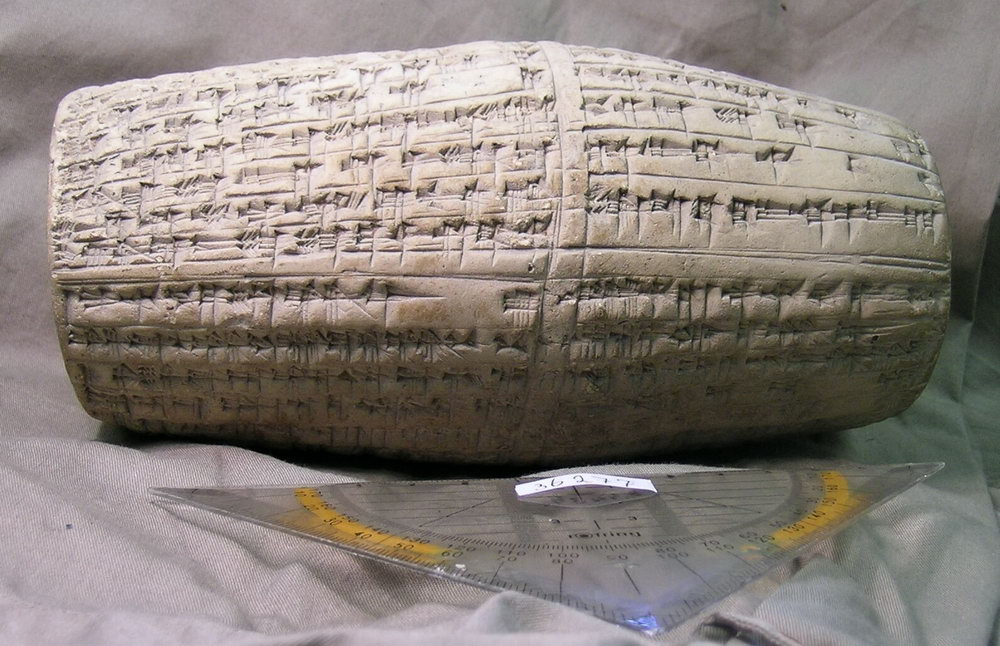
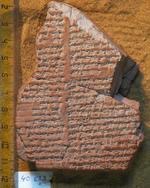
![The relevant lines are quoted below in a translation by Bert van der Spek.
[Column 5] 4 For two years [he will exercise kingship]. [1]. 5 That king a eunuch [will murder]. 6 A certain prince [......] [2] 7 will set out and [seize] the thr[one] 8 Five years [he will exercise] king[ship] 9 Troops of the land of Hani [......] [3] 10 will set out a[nd? .. ]./-ship?\ th[ey will? ...] 11 [his] troop[s they will defeat;] 12 booty from him they will take [and his spoils] 13 they will plunder. Later [his] tr[oops ...] 14 will assemble and his weapons he will ra[ise (...)] 15 Enlil, Šamaš and [Marduk(?)] [4] 16 will go at the side of his army [(...);] 17 the overthrow of the Hanaean troops he will [bring about]. 18 His extensive booty he will car[ry off and] 19 into his palace he [will bring it] 20 The people who had [experienced] misfortune 21 [will enjoy] well-being. 22 The heart of the land [will be happy] 23 Tax exemption [he will grant to Babylonia]
http://www.livius.org/aj-al/alexander/alexander_t49.html](https://therealsamizdat.com/wp-content/uploads/2015/08/dynastic-prophecy-bm40623_cols_vi_v.jpg)


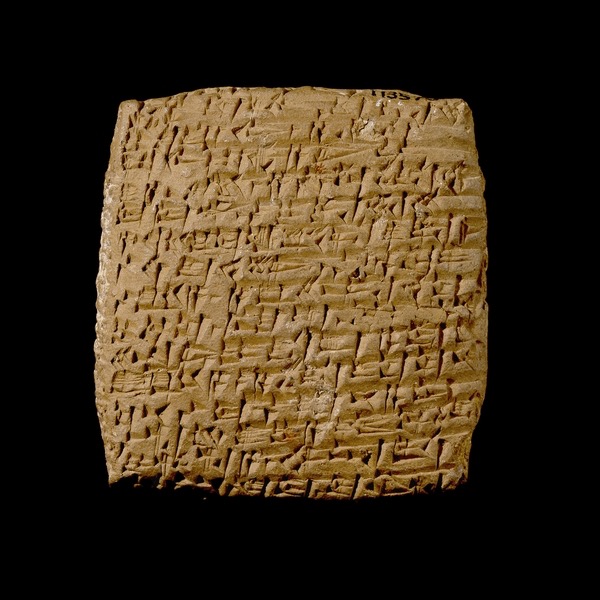
![AM-102 ; No. #1 (K4023) British Museum of London
Tablet K.4023 COL. I [Starting on Line 38] . . . Root of caper which (is) on a grave, root of thorn (acacia) which (is) on a grave, right horn of an ox, left horn of a kid, seed of tamarisk, seed of laurel, Cannabis, seven drugs for a bandage against the Hand of a Ghost thou shalt bind on his temples. FOOTNOTES: [1] - The American Journal of Semitic Languages and Literatures, Vol. 54, No. 1/4 (Oct., 1937), pp. 12-40; Assyrian Prescriptions for the Head By R. Campbell Thompson
http://antiquecannabisbook.com/chap2B/Assyria/K4023.htm](https://therealsamizdat.com/wp-content/uploads/2015/07/k4023-antdiluvian-medical-text.jpg)










 Samizdat


