
Samizdat

Publishing the Forbidden. All Rights Reserved. © Samizdat 2014-2025.

Tag: University of Oklahoma Libraries

Eco: The Indo-European Hypothesis, 2
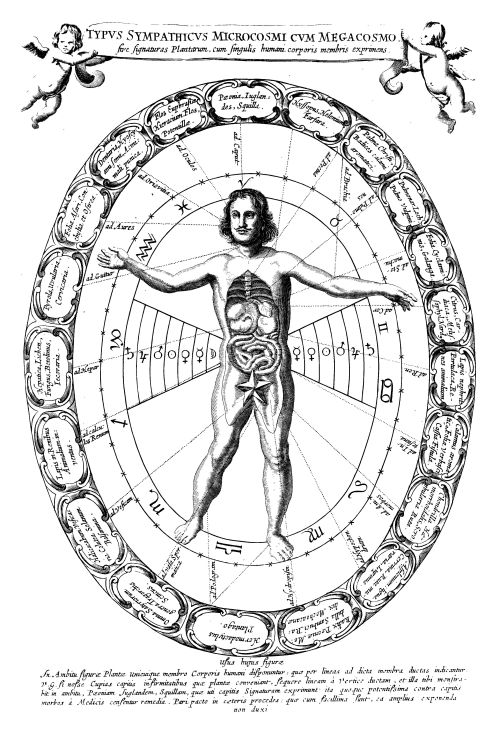
kircher_079

Athanasius Kircher (1602-80), sympathies between the microcosm and the megacosm, from Mundus subterraneus, 1665, vol. 2, p.406. Courtesy of Stanford University and the University of Oklahoma Libraries. This work is in the public domain in its country of origin and other countries and areas where the copyright term is the author’s life plus 100 years or less. 

“But are we really able to say that with the birth of the modern science of linguistics the ghost of Hebrew as the holy language had finally been laid to rest? Unfortunately not. The ghost simply reconstituted itself into a different, and wholly disturbing, Other.

As Olender (1989, 1993) has described it, during the nineteenth century, one myth died only to be replaced by another.

With the demise of the myth of linguistic primacy, there arose the myth of the primacy of a culture–or of a race. When the Hebrew language and civilization was torn down, the myth of the Aryan races rose up to take its place.

The reality of Indo-European was only virtual; yet it was still intrusive. Placed face to face with such a reality, Hebrew receded to the level of metahistory. It became a symbol.

At the symbolic level, Hebrew ranged from the linguistic pluralism of Herder, who celebrated it as a language that was fundamentally poetic (thus opposing an intuitive to a rationalistic culture), to the ambiguous apology of Renan, who–by contrasting Hebrew as the tongue of monotheism and of the desert to Indo-European languages (with their polytheistic vocation)–ends up with oppositions which, without our sense of hindsight, might even seem comic: the Semitic languages are incapable of thinking in terms of multiplicity, are unwilling to countenance abstraction; for this reason the Semitic culture would remain closed to scientific thinking and devoid of a sense of humor.

Unfortunately, this is not just a story of the gullibility of scientists. We know only too well that the Aryan myth had political consequences that were profoundly tragic. I have no wish to saddle the honest students of Indo-European with blame for the extermination camps, especially as–at the level of linguistic science–they were right.

It is rather that, throughout this book, we have been sensitive to side effects. And it is hard not to think of these side effects when we read in Olender the following passage from the great linguist, Adolphe Pictet, singing this hymn to Aryan culture:

“In an epoch prior to that of any historical witnesses, an epoch lost in the night of time, a race, destined by providence to one day rule the entire world, slowly grew in its primitive birthplace, a prelude to its brilliant future.

Privileged over all others by the beauty of their blood, by their gifts of intelligence, in the bosom of a great and severe nature that would not easily yield up its treasures, this race was summoned from the very beginning to conquer. [ . . . ]

Is it not perhaps curious to see the Aryas of Europe, after a separation of four or five thousand years, close the circle once again, reach their unknown brothers in India, dominate them, bring to them the elements of a superior civilization, and then to find ancient evidence of a common origin?”

(Les origines indo-européennes ou les Aryas primitifs, 1859-63: III, 537, cited in Olender 1989: 130-9).

At the end of a thousand year long ideal voyage to the East in search of roots, Europe had at last found some ideal reasons to turn that virtual voyage into a real one–for the purposes not of intellectual discovery, however, but of conquest.

It was the idea of the “white man’s burden.” With that, there was no longer any need to discover a perfect language to convert old or new brothers. It was enough to convince them to speak an Indo-European language, in the name of a common origin.”

Umberto Eco, The Search for the Perfect Language, translated by James Fentress, Blackwell. Oxford, 1995, pp. 105-6.
Selz: Patriarchs and Sages

“A central figure in the discussion about the alleged Mesopotamian model for the antediluvian patriarchs soon became Enoch, who lived for 365 (364) years and of whom we read in Genesis 5:24: “Enoch walked with God then he was no more, because God took him away.”

The verb lāqah in this context has received numerous comments. Biblical sources offer three interpretations:

a) The liberation of a dead person from the power of the underworld;

b) A final removal from earth (cf. Elijah); or

c) An act of temporal transference, as in dream visions.

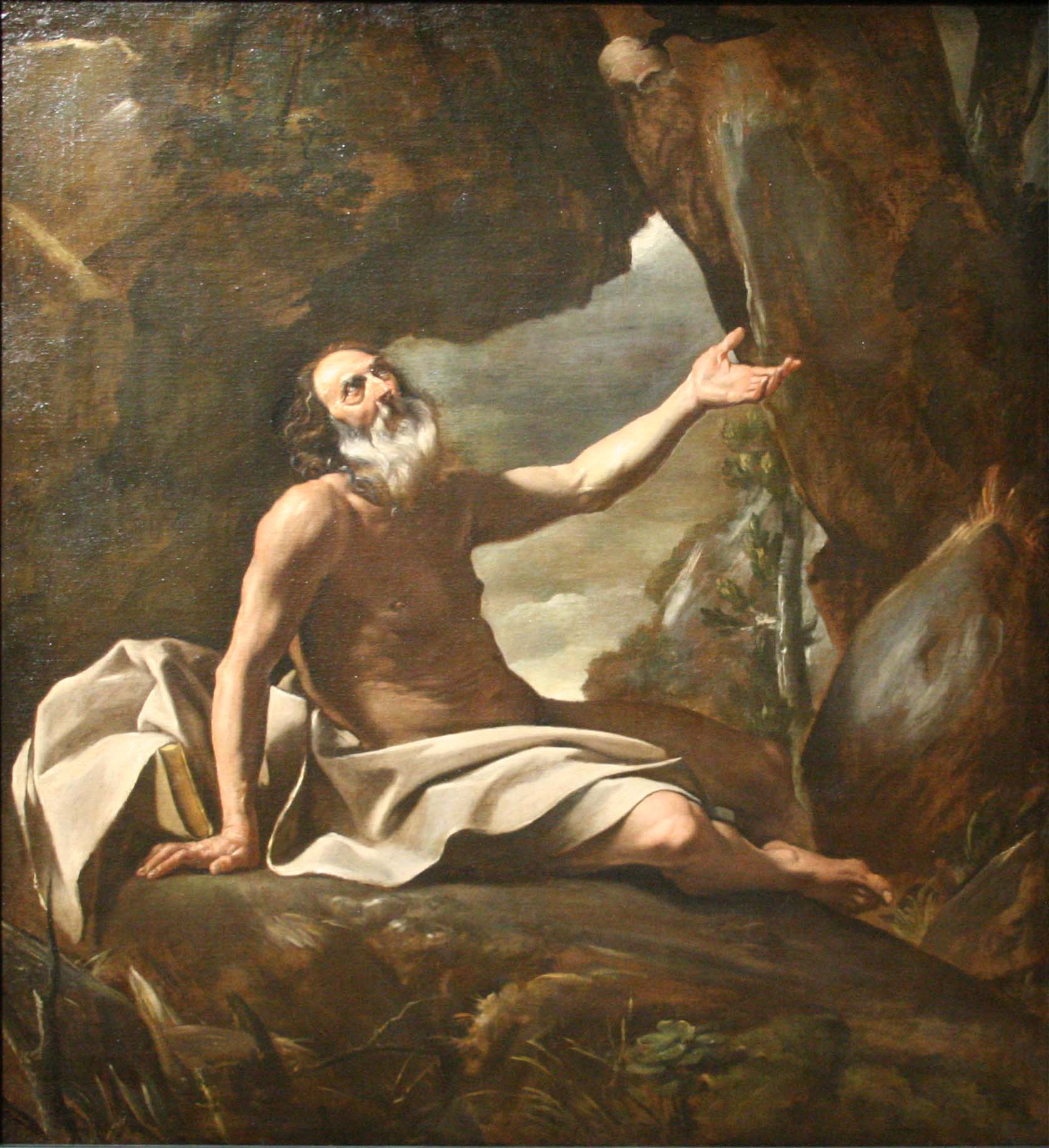
Giovanni Lanfranco (1582-1647 CE), Elie nourri par le corbeau, 1624-5 CE. Oil on canvas, held at the Musée des Beaux-Arts de Marseille, Accession number BA 451, photographed by Rvalette.  This faithful photographic reproduction of an original two-dimensional work of art is in the public domain where the copyright term is the author’s life plus 100 years or less.

Giovanni Lanfranco (1582-1647 CE), Elie nourri par le corbeau, 1624-5 CE. Oil on canvas, held at the Musée des Beaux-Arts de Marseille, Accession number BA 451, photographed by Rvalette.
This faithful photographic reproduction of an original two-dimensional work of art is in the public domain where the copyright term is the author’s life plus 100 years or less.

The name Enoch has found several interpretations: It has been argued that J derived the name from hānaq, “to dedicate” and “to train” which comes close to an interpretation of “the sage” (cf. also Arabic Idris!), and it may well be that the two values attributed to Enoch in Genesis are a “babilistic” interpretation of “a man dedicated to and trained by God.”

In the light of Genesis 4:17 the name was also thought to convey the meaning of “founder,” referring to the eponymous city Enoch. This Enoch is possibly entering the rank of those patriarchs who, according to biblical tradition, were perceived as a sort of cultural heroes.

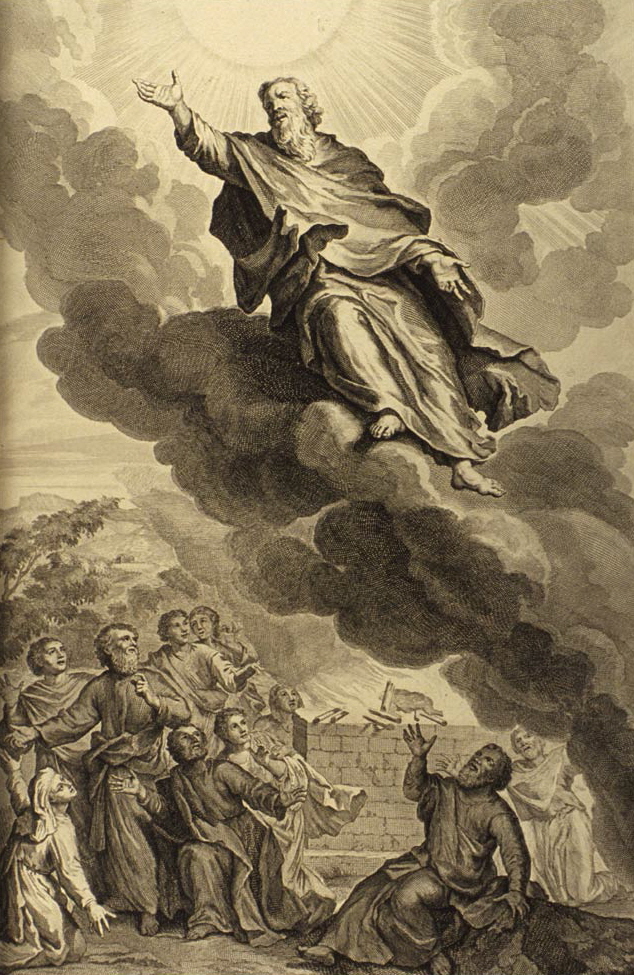
Gerard Hoet (1648-1733 CE), Illustrators of the Figures de la Bible, P. de Hondt, The Hague, 1728 CE. God took Enoch, as in Genesis 5:24: "And Enoch walked with God: and he was not; for God took him." (KJV) illustration from the 1728 Figures de la Bible; illustrated by Gerard Hoet (1648–1733) and others, and published by P. de Hondt in The Hague; image courtesy Bizzell Bible Collection, University of Oklahoma Libraries. This work is in the public domain in its country of origin and other countries and areas where the copyright term is the author's life plus 70 years or less. https://commons.wikimedia.org/wiki/File:Figures_God_took_Enoch.jpg

Gerard Hoet (1648-1733 CE), Illustrators of the Figures de la Bible, P. de Hondt, The Hague, 1728 CE.
God took Enoch, as in Genesis 5:24: “And Enoch walked with God: and he was not; for God took him.” (KJV) illustration from the 1728 Figures de la Bible; illustrated by Gerard Hoet (1648–1733) and others, and published by P. de Hondt in The Hague; image courtesy Bizzell Bible Collection, University of Oklahoma Libraries.
This work is in the public domain in its country of origin and other countries and areas where the copyright term is the author’s life plus 70 years or less.
https://commons.wikimedia.org/wiki/File:Figures_God_took_Enoch.jpg

(Westermann, Genesis, pp. 443-45 suggests that Enoch may refer to the foundation of a city or sanctuary. Westermann writes: “In Israel wurde die Erinnerung daran bewahrt, daß der Städtebau zum dem gehört, was vor und außerhalb der Geschichte Israels geschah. Die Gründung der ersten Stadt gehört der Urgeschichte an” (p. 444).

("In Israel, the memory was preserved because of urban development, 
what happened before and outside of history. 
The founding of the first city belongs to prehistory.")

Discussing Genesis 4:17 most exegetes remark that it seems unlikely that Kain, the tiller, condemmed to a nomadic life, could be renowned as the founder of a city. In an attempt to harmonize the alleged discrepancies, they even assume that the said founder was originally Enoch (cf. e.g. Westermann, Genesis, p. 443).

With the publication of a Seleucid text from Uruk, W 20030,7 the comparison between Berossos, the Old Testament, and the Sumerian King List reached a new level:

Seleucid text, Uruk, W 20030,7.  Excerpt from Selz, Of Heroes and Sages, 2011, p. 793.

Seleucid text, Uruk, W 20030,7. Published by J.J.A. van Dijk, “Die Tontafeln aus dem Resch-Heiligtum,” in Uruk-Wanka Vorberichte 18 (1962): pp. 43-52, from which this transcription is taken. Also on Samizdat, in Lenzi: The Uruk List of Kings and Sages.
Excerpt from Selz, Of Heroes and Sages, 2011, p. 793.

This document establishes an important link between Berossos’ account of the primeval kings and his story of the sage Oannes.

In this text the names of Mesopotamian rulers are accompanied by names of advisors, sages, the so-called apkallū which play an important role in Mesopotamian iconography and have been known, up until now, chiefly from the so-called Etiological Myth of the “Seven Sages” studied by Erica Reiner in 1961.

(E. Reiner, “The Etiological Myth of the ‘Seven Sages,’Orientalia 30 (1961): 1-11; eadem, Astral Magic in Babylonia (Transactions of the American Philosophical Society 85.4; Philadelphia: American Philosophical Society, 1995).

(See further S. Parpola, “Mesopotamian Astrology and Astronomy as Domains of the Mesopotamian ‘Wisdom,’” in Die Rolle der Astronomie in den Kulturen Mesopotamiens: Beiträge zum 3. Grazer Morgenländischen Symposium (ed. H. Galter and B. Scholz; Grazer Morgenländische Studien 3; Graz: RM Druck-und Verlagsgesellschaft, 1993), pp. 23-7.)

This list is certainly fictional, it is, however, based on scholarly traditions: the name of the well-known compiler of the standard version of the Gilgamesh Epic, dsîn-liq-unninnī, functions as an apkallu to Gilgamesh himself.

Further, a certain Kabtu-il-Marduk, perhaps referring to the author of the Erra Epic Kabti-ilāni-Marduk, is mentioned as a sage during the reign of Ibbi-Sîn (ca. 2028-2004 BCE), unlucky last king of the Ur III empire.”

Gebhard J. Selz, “Of Heroes and Sages–Considerations of the Early Mesopotamian Background of Some Enochic Traditions,” in Armin Lange, et alThe Dead Sea Scrolls in Context, v. 2, Brill, 2011, pp. 792-4.