
Samizdat

Publishing the Forbidden. All Rights Reserved. © Samizdat 2014-2025.

Category: 1875

Kvanvig: Initiation is a Restriction of Marduk

“We think van der Toorn is right in taking this as a comment to the tendency present in the Catalogue. This is still no absolute chronology, since apkallus are listed as authors in III, 7; IV, 11; and VI, 11.

Nevertheless, the commentary seems to underscore three stages in the transmission of highly recognized written knowledge: it starts in the divine realm with the god of wisdom Ea; at the intersection point between the divine and the human stands Uanadapa; and as the third link in this chain stands (we must presuppose) an ummanu, “scholar.”
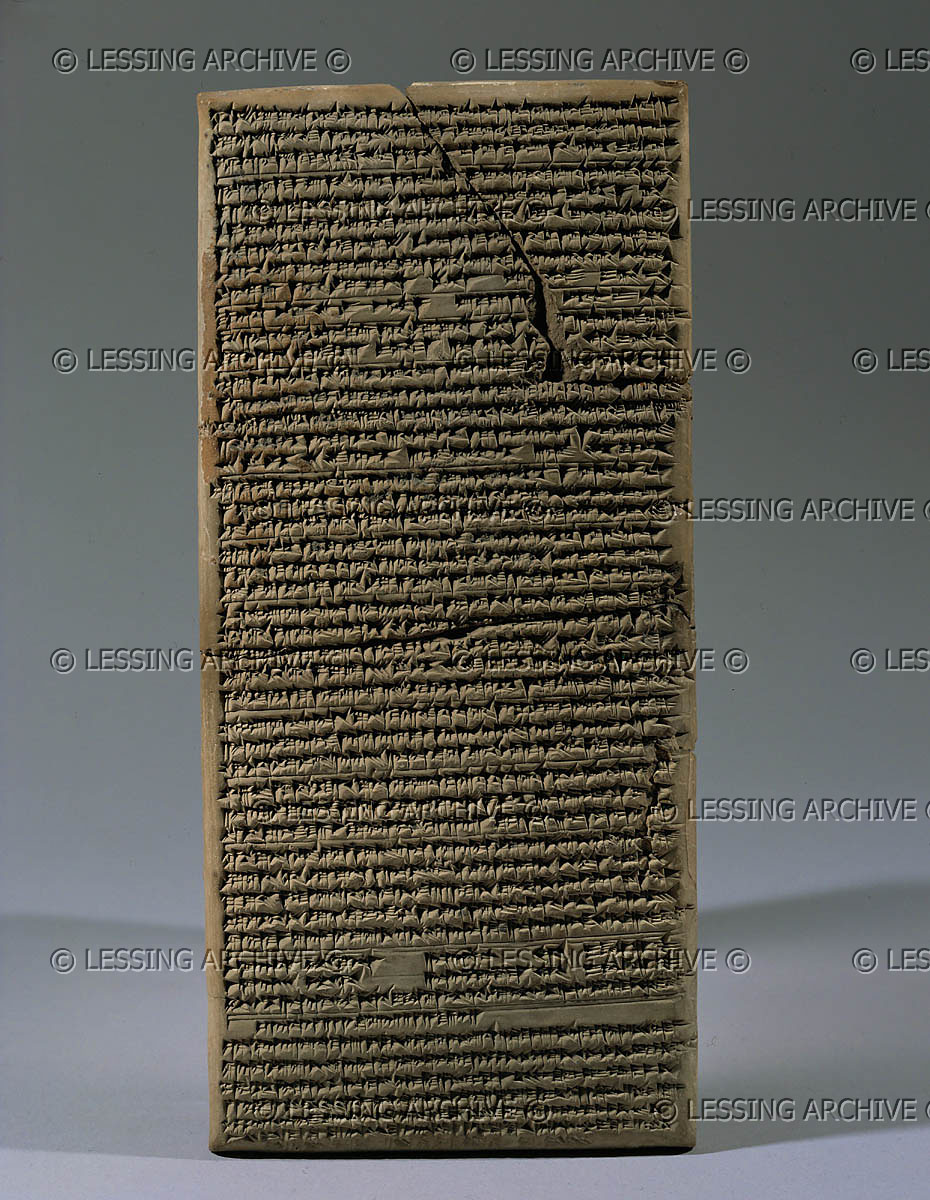
Tablet of Uruk. The ritual of daily sacrifices in the temple of the god Anu in Uruk.  Seleucid period, 3rd-2nd Centuries BCE, Hellenistic, from Uruk.  Baked clay, 22,3 x 10,4 cm  Louvre, AO 6451.

Tablet of Uruk. The ritual of daily sacrifices in the temple of the god Anu in Uruk.
Seleucid period, 3rd-2nd Centuries BCE, Hellenistic, from Uruk.
Baked clay, 22,3 x 10,4 cm
Louvre, AO 6451.

A. Lenzi has called attention to a colophon to a medical text which reveals a similar kind of transmission:

“Salves (and) bandages: tested (and) checked, which are ready at hand, composed by the ancient apkallus from before the flood, which in Šuruppak in the second year of Enlil-bani, king of Isin, Enlil-muballit, apkallu of Nippur, bequeathed. A non-expert may show an expert. An expert may not show a non-expert. A restriction of Marduk.”

(Medical Text, AMT 105, 1, 21-5. Lenzi, Secrecy and the Gods, p. 117.)

The models of transmission in the commentary of the Catalogue and in this colophon are not exactly the same, but the tendency is. In this text, an expert, possibly an āšipu, has in his hands a tablet of high dignity: it belongs to the secrets of the gods (cf. below).

AM-102 ; No. #1 (K4023) British Museum of London 

Tablet K.4023  COL. I  [Starting on Line 38] . . .  Root of caper which (is) on a grave, root of thorn (acacia) which (is) on a grave, right horn of an ox, left horn of a kid, seed of tamarisk, seed of laurel, Cannabis, seven drugs for a bandage against the Hand of a Ghost thou shalt bind on his temples.  FOOTNOTES:  [1] - The American Journal of Semitic Languages and Literatures, Vol. 54, No. 1/4 (Oct., 1937), pp. 12-40; Assyrian Prescriptions for the Head By R. Campbell Thompson 

 http://antiquecannabisbook.com/chap2B/Assyria/K4023.htm

AM-102 ; No. #1 (K4023)
British Museum of London 

Tablet K.4023
COL. I
[Starting on Line 38] . . .
Root of caper which (is) on a grave, root of thorn (acacia) which (is) on a grave, right horn of an ox, left horn of a kid, seed of tamarisk, seed of laurel, Cannabis, seven drugs for a bandage against the Hand of a Ghost thou shalt bind on his temples.
FOOTNOTES:
[1] – The American Journal of Semitic Languages and Literatures, Vol. 54, No. 1/4 (Oct., 1937), pp. 12-40; Assyrian Prescriptions for the Head By R. Campbell Thompson 


http://antiquecannabisbook.com/chap2B/Assyria/K4023.htm

Therefore, if somebody not belonging to the initiated by accident should have such a tablet, he may show it to the expert, but the expert should never show it to an uninitiated person. The content of the tablet was secret; it went back to the ancient apkallus from before the flood.

Afterwards a distinguished sage, an apkallu in Nippur, inherited it, and from this line of transmission it arrived to the scholar writing this colophon. The division between the apkallus before the flood and the postdiluvian apkallu in Nippur may here be similar to the division of the first group of apkallus of divine descent and the next group of four apkallus of human descent in Bīt Mēseri.

As we have seen, the Late Babylonian Uruk tablet also had a division between a group of seven “before the flood” and a group of ten afterwards, but here the first seven were apkallus, and the next group (with one or two exceptions) were ummanus.

What we observe here is confirmed by two independent contributions with different scope that we already have called attention to, K. van der Toorn, Scribal Culture and the Making of the Hebrew Bible, and A. Lenzi, Secrecy and the Gods.

They are both concerned with the transition from oral transmission of divine messages to written revelations, and they both use Mesopotamian sources from the first millennium as an analogy to what took place in Israel in the formation of the Hebrew Bible.

(van der Toorn, Scribal Culture, pp. 205-21; Lenzi, Secrecy and the Gods, pp. 67-122.)

Enuma Elish means “when above”, the two first words of the epic.  This Babylonian creation story was discovered among the 26,000 clay tablets found by Austen Henry Layard in the 1840's at the ruins of Nineveh.  Enuma Elish was made known to the public in 1875 by the Assyriologist George Adam Smith (1840-76) of the British Museum, who was also the discoverer of the Babylonian Epic of Gilgamesh. He made several of his findings on excavations in Nineveh. http://www.creationmyths.org/enumaelish-babylonian-creation/enumaelish-babylonian-creation-3.htm

Enuma Elish means “when above”, the two first words of the epic.
This Babylonian creation story was discovered among the 26,000 clay tablets found by Austen Henry Layard in the 1840’s at the ruins of Nineveh.
Enuma Elish was made known to the public in 1875 by the Assyriologist George Adam Smith (1840-76) of the British Museum, who was also the discoverer of the Babylonian Epic of Gilgamesh. He made several of his findings on excavations in Nineveh.
http://www.creationmyths.org/enumaelish-babylonian-creation/enumaelish-babylonian-creation-3.htm

Van der Toorn is concerned about the broad tendency in Mesopotamian scholarly series from the end of the second millennium to classify these as nisirti šamê u erseti, “a secret of heaven and earth.” This expression, occurring in colophons and elsewhere, does two things to the written scholarly lore: on the one hand, it claims that this goes back to a divine revelation; on the other hand, it restricts this revelation to a defined group of scholars.

This tendency goes along with the tendency to date the written wisdom back to primeval time, or to the time before the flood. This also concerns the most well-known compositions from the end of the second millennium, Enuma Elish and the standard version of Gilgamesh.”

Helge Kvanvig, Primeval History: Babylonian, Biblical, and Enochic: An Intertextual Reading, Brill, 2011, pp. 149-51.

The Gods Fear Zu

“A long but broken text explains why it was that he had to take refuge in the mountain of ‘Sabu under the guise of a bird of prey.

We learn that Zu gazed upon the work and duties of Mul-lil;

“he sees the crown of his majesty, the clothing of his divinity, the tablets of destiny, and Zu himself, and he sees also the father of the gods, the bond of heaven and earth.

The desire to be Bel (Mul-lil) is taken in his heart; yea, he sees the father of the gods, the bond of heaven and earth; the desire to be Bel is taken in his heart:

‘Let me seize the tablets of destiny of the gods, and the laws of all the gods let me establish (lukhmum); let my throne be set up, let me seize the oracles; let me urge on the whole of all of them, even the spirits of heaven.’

So his heart devised opposition; at the entrance to the forest where he was gazing he waited with his head (intent) during the day.

When Bel pours out the pure waters, his crown was placed on the throne, stripped from (his head). The tablets of destiny (Zu) seized with his hand; the attributes of Bel he took; he delivered the oracles.

(Then) Zu fled away and sought his mountains. He raised a tempest, making (a storm).”

Then Mul-lil, “the father and councillor” of the gods, consulted his brother divinities, going round to each in turn. Anu was the first to speak. He

“opened his mouth, he speaks, he says to the gods his sons: ‘(Whoever will,) let him subjugate Zu, and (among all) men let the destroyer pursue him (?).

(To Rimmon) the first-born, the strong, Anu declares (his) command, even to him: …’0 Rimmon, protector (?), may thy power of fighting never fail! (Slay) Zu with thy weapon. (May thy name) be magnified in the assembly of the great gods. (Among) the gods thy brethren (may it destroy) the rival. May incense (?) (etarsi) be offered, and may shrines be built!

(In) the four (zones) may they establish thy strongholds. May they magnify thy fortress that it become a fane of power in the presence of the gods, and may thy name be mighty?’

(Rimmon) answered the command, (to Anu) his father he utters the word:

‘(0 my father, to a mountain) none has seen mayest thou assign (him); (never may) Zu play the thief (again) among the gods thy sons; (the tablets of destiny) his hand has taken; (the attributes of Bel) he seized, he delivered the oracles; (Zu) has fled away and has sought his mountains.'”

Rimmon goes on to decline the task, which is accordingly laid upon another god, but with like result.

George Rawlinson - Source: Seven Great Monarchies Of The Ancient Eastern World, Vol 1. (1875) The Chaldean god Nebo, from a statue in the British Museum.  http://www.totallyfreeimages.com/56/Nebo.

George Rawlinson: Seven Great Monarchies Of The Ancient Eastern World, Vol 1. (1875)
The Chaldean god Nebo, from a statue in the British Museum.
http://www.totallyfreeimages.com/56/Nebo.

Then Anu turns to Nebo:

“(To Nebo), the strong one, the eldest son of Istar, (Anu declares his will) and addresses him:  … ‘0 Nebo, protector (?), never may thy power of fighting fail! (Slay) Zu with thy weapon. May (thy name) be magnified in the assembly of the great gods! Among the gods thy brethren (may it destroy) the rival!

May incense (?) be offered and may shrines be built! In the four zones may thy strongholds be established! May they magnify thy stronghold that it become a fane of power in the presence of the gods, and may thy name be mighty!’

Nebo answered the command: ‘0 my father, to a mountain none hast seen mayest thou assign (him); never may Zu play the thief (again) among the gods thy sons! The tablets of destiny his hand has taken; the attributes of Bel he has seized; he has delivered the oracles; Zu is fled away and (has sought) his mountains.'”

Like Rimmon, Nebo also refused to hunt down and slay his brother god, the consequence being, as we have seen, that Zu escaped with his life, but was changed into a bird, and had to live an exile from heaven for the rest of time.”

A.H. Sayce, Lectures on the Origin and Growth of Religion as Illustrated by the Religion of the Ancient Babylonians, 5th ed., London, 1898, pp. 297-9.

Kabbalah as Metasystem

“The prime source for the precursors of the occult revival were without question Athanasius Kircher (1602-80), a German Jesuit whose Oedipus Aegyptiacus (1652) detailed Kabbalah amongst its study of Egyptian mysteries and hieroglyphics, and Cornelius Agrippa’s De Occulta Philosophia (1533).

Other works, such as those from alchemists including Khunrath, Fludd and Vaughan indicated that the Kabbalah had become the convenient metamap for early hermetic thinkers. Christian mystics began to utilise its structure for an explanation of their revelations, the most notable being Jacob Boeheme (1575-1624). However, the most notable event in terms of our line of examination is undoubtedly the publication of Christian Knorr von Rosenroth’s (1636-89) Kabbalah Denudata in Latin in 1677 and 1684, which provided translations from the Zohar and extracts from the works of Isaac Luria.”

“Another stream stemming from Rosenroth’s work came through Eliphas Levi (1810-75), who … ascribed to the Tarot an ancient Egyptian origin. From de Gebelin and Rosenroth, Levi synthesized a scheme of attribution of the Tarot cards to the twenty-two paths of the Tree of Life, a significant development in that it provided a synthetic model of processes to be later modified and used by the Golden Dawn as mapping the initiation system of psychological, occult, and spiritual development. Levi wrote, “Qabalah … might be called the mathematics of human thought.”

“It is said by traditional Kabbalists and Kabbalistic scholars that the occultist has an imperfect knowledge of the Tree, and hence the work of such is corrupt. It appears to me that the Kabbalah is a basic device whose keys are infinite, and that any serious approach to its basic metasystem will reveal some relevance if tested in the world about us, no matter how it may be phrased.

The first Kabbalists cannot be said to have had an imperfect knowledge because they did not understand or utilise information systems theory or understand modern cosmology. Indeed, their examination of themselves and the Universe revealed such knowledge many hundreds of years before science formalised it, in the same way that current occult thinking may be rediscovered in some new science a hundred or thousand years hence.”

–Frater FP, The Magician’s Kabbalah, pp.  5-7.