
Sumerian Archeology
“Arriving in 1878, Rassam went to work with a will. Over a period of four years he opened excavations not only at Nineveh but at sites ranging from eastern Anatolia to southern Iraq, leaving the day-to-day excavation to his assistants and rarely visiting the sites.

Bronze band from the Palace Gates of Shalmaneser III in the British Museum.
The scenes show in the upper tier the king receiving tribute from Tyre and Sidon in Lebanon and in the lower tier the conquest of the town of Hazuzu in Syria.
https://en.wikipedia.org/wiki/Balawat_Gates
His discoveries included panels of embossed bronze sheeting that had originally covered the great gates erected by Shalmaneser III at Balawat near Nimrud, and around 50,000 cuneiform cylinders and tablets in the Shamash temple at Sippar near Babylon. But times had changed since the cavalier days of the 1850s.
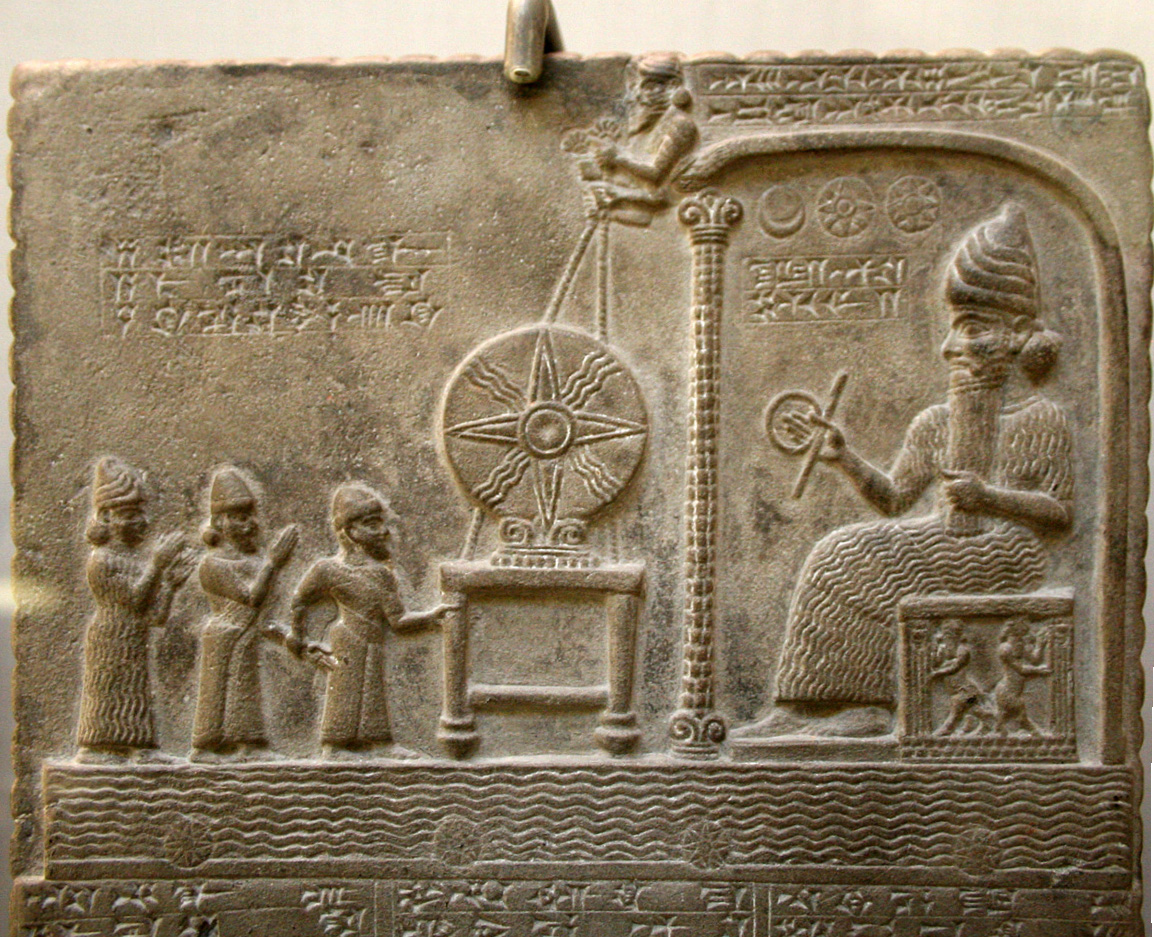
Relief image on the Tablet of Shamash, British Library room 55. Found in Sippar (Tell Abu Habbah), in Ancient Babylonia; it dates from the 9th century BC and shows the sun god Shamash on the throne, in front of the Babylonian king Nabu-apla-iddina (888-855 BC) between two interceding deities. The text tells how the king made a new cultic statue for the god and gave privileges to his temple.
https://en.wikipedia.org/wiki/Tablet_of_Shamash#/media/File:Tablet_of_Shamash_relief.jpg
Considerable advances had been made in excavation techniques and recording methods. It was no longer enough to plunder sites for antiquities; buildings and other contexts had to be carefully investigated and recorded, and objects had to be recovered with care, without allowing them to “crumble to dust.”
Rassam was seriously criticized by other scholars in the field, and his departure largely saw the end of crude excavation methods in Mesopotamia—until the wanton destruction by bandits with bulldozers following the 2003 invasion of Iraq, which threatens utterly to obliterate a huge number of sites.
As a native of the region, Rassam was very aware of the threat to the ancient cities from treasure hunters and brick robbers. When he left for Britain, therefore, he hired guardians to prevent future plundering in the important sites, including Kuyunjik and Sippar. Over the following decade, however, antiquities, and particularly tablets, that seemed likely to have come from these sites appeared in some numbers on the international market. The British Museum sent out Wallis Budge to investigate.
Budge arrived in Baghdad in 1888, armed with a permit to excavate Kuyunjik as a cover for his detective work. Within days, he purchased many tablets from local dealers, most of whom he found to be the very people appointed to guard the ancient sites, and skillfully foiled a plan to prevent him from exporting them.
Later in the year he reopened excavations at Kuyunjik, recovering some 200 tablets from the spoil of previous excavations. His luck turned the following year, however, when he excavated at ed-Der, part of ancient Sippar. The procedures involved in obtaining an excavation permit were long-winded and public: By the time Budge could start work, ed-Der had been thoroughly “examined” by the Vali of Baghdad, with the result that 10,000 tablets had found their way into the hands of dealers.
A similar fate befell the Frenchman Ernest de Sarzec, who excavated Telloh (ancient Girsu) in 1877–1881 and 1888–1900. This was the first serious investigation of a site belonging to Mesopotamia’s original Sumerian civilization, and the objects found here created great excitement in Europe, where they were displayed in the 1880s Paris exhibition.

Stele of Vultures detail 01-transparent.png
One fragment of the victory stele of the king Eannatum of Lagash over Umma, Sumerian archaic dynasties.
https://en.wikipedia.org/wiki/Stele_of_the_Vultures#/media/File:Stele_of_Vultures_detail_01-transparent.png
The powerful and austere art style typified by the diorite statues strongly impressed European art critics, and a sculptured slab, dubbed the “Stele of the Vultures,” sparked great interest, because it showed for the first time in history an organized army going to war.
Telloh also yielded numerous tablets, some relating to border disputes with neighboring Umma, the fascinating first contemporary account of warfare—but most of them were not recovered by de Sarzec. During de Sarzec’s frequent absences, local people, often sponsored by Baghdad dealers, abstracted around 40,000 tablets from one of the mounds. These provided the first substantial body of works in the Sumerian language, whose very existence had been doubted in earlier decades.
The first U.S. expedition to work in Mesopotamia experienced an even more dramatic mixture of success and failure. Sponsored by Pennsylvania University, a team headed by John Peters arrived in 1887 to excavate Nippur, the holy city of ancient Sumer.
Hopelessly out of their depth in the complexities of dealing with the local villagers and authorities, their first season ended in an all-out attack in which their camp was set on fire, half their horses perished, and they lost $1,000 in gold—although they saved their antiquities.
Work resumed in 1890, under more auspicious circumstances, and continued intermittently until 1900. Among the 30,000 tablets recovered from Nippur were around 2,100 whose subject matter was literature, in contrast to the ubiquitous economic texts: These opened a window onto the fascinating world of the Sumerians and to this day form the bulk of known Sumerian literature.”
Jane R. McIntosh, Ancient Mesopotamia, 2005, pp. 30-2.
 Samizdat

